

© 2026 COACH.BIKE
Current capacity
We consider training history, present fitness, health, injury history and the athlete’s ability to recover.
Effective coaching is more than a sequence of workouts. It starts with understanding the athlete, clarifying what matters and building a plan that can adapt as fitness, recovery and life change.
Our approach combines masters-specific training, strategic season planning, co-design and ongoing feedback.
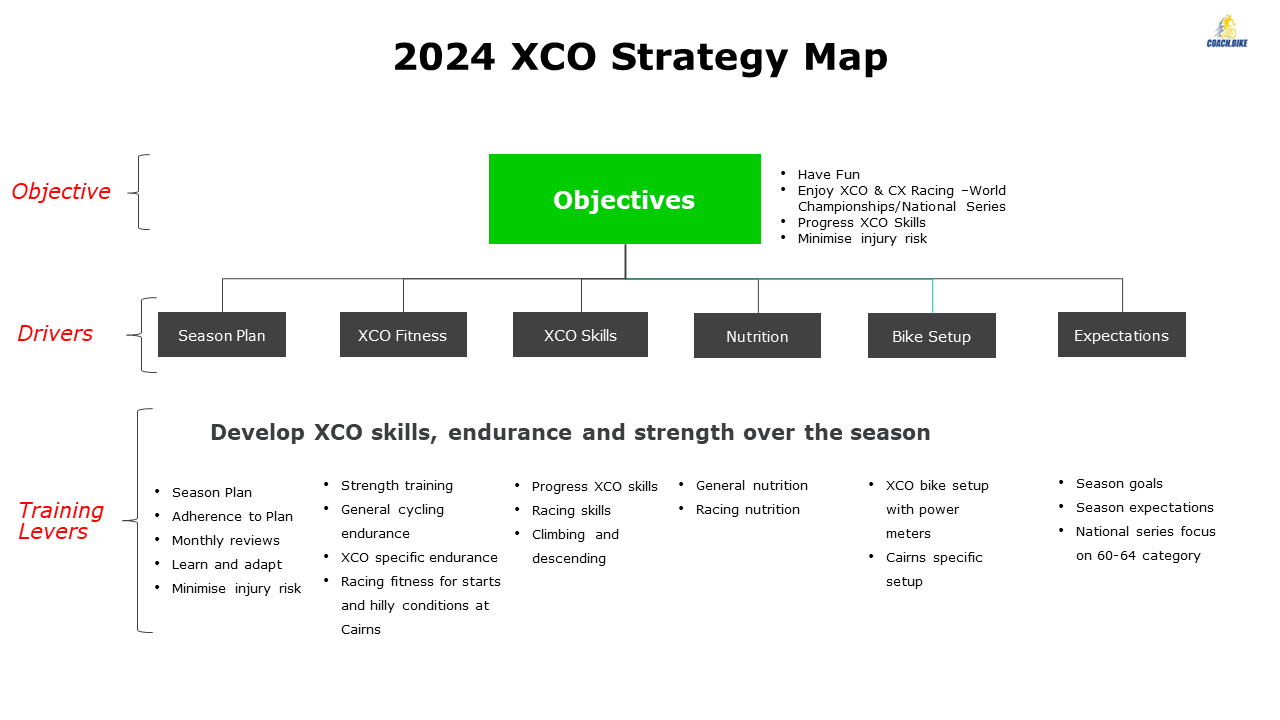
Strategy made practical: connecting an athlete’s objectives with the fitness, skills, preparation and decisions needed throughout the season.
Start with the athlete
Masters cyclists bring different levels of experience, fitness, available time, recovery capacity and ambition. Effective coaching begins by understanding the whole athlete before prescribing the training.
Our starting principle
We consider the athlete’s goals, cycling history, current capability, health, recovery and wider commitments. This creates the foundation for decisions about training, racing and season priorities.
The result: a practical plan built with the athlete, not simply delivered to them.
We consider training history, present fitness, health, injury history and the athlete’s ability to recover.
Training needs to work around employment, family, travel and the time the athlete can realistically commit.
We clarify the events, experiences and improvements that matter most, and define what a successful season looks like.
The athlete’s experience, preferences and feedback help shape the plan and guide how it changes throughout the season.
Strategic season planning
A race goal on its own is not a strategy. We identify what the athlete is trying to achieve, determine the factors most likely to influence that outcome and coordinate the training actions needed to make progress.
Define the events, experiences and performance outcomes that matter most to the athlete, including what success will mean for the season.
Determine which areas will have the greatest influence on the objective, such as endurance, strength, technical skills, recovery, nutrition, bike setup and race preparation.
Translate the priorities into focused training actions that work together across the season and can be reviewed as circumstances change.
Focus training on the few challenges and capabilities that matter most, rather than trying to improve everything at once.
Coaching principles in practice
Strategic planning and co-design allow the coaching approach to reflect each athlete’s discipline, experience, goals and capacity to train.
Case study 01
45-year-old 24-hour solo mountain bike racer
John’s coaching was organised around clear quarterly goals and monthly performance reviews. This strategic structure allowed his endurance development to be monitored throughout the year and the training plan to be adjusted as required.
Improvement in endurance within one year, followed by an Australian championship victory in his age group.
Case study 02
65-year-old cyclocross racer
Tom’s preparation for the Australian Cyclocross Championships was co-designed around his goals and experience. His feedback about training intensity and recovery was used to adapt the plan as the event approached.
His best championship performance, winning the Australian Cyclocross Championship in his age group.
Coaching built around you
Tell us about your cycling goals, the challenges you are facing and what you would like help with. If it looks like Coach.Bike can help, we will invite you to arrange a free 15-minute coaching call.
Request a Free Coaching CallStart with a short enquiry. There is no obligation to proceed.
